Craftsmanship · Master glassmakers since 1981

Every step of the craft,
mastered in our workshop

From graphic design to installation, through glass cutting, painting, firing and leading, every stage of creating and restoring stained glass is carried out by our own stained glass artists in Marseille, true to tradition.

“A craft of precision, with in-depth knowledge of techniques and raw materials.”

01

Everything in-house

Design, drawing, cutting, painting, firing, leading, cementing, armatures and installation: no step is subcontracted. One workshop, one standard, from the first sketch to the last joint.

02

The finest materials

Mouth-blown antique glass, drawn lead, kiln-fired grisaille and enamels: we use the same materials as the master glassmakers of past centuries, sourced from recognised suppliers.

03

Done by the book

Restoring with respect for the original techniques, creating in line with European standards, documenting every intervention: rigour is what makes stained glass last.

The stages

From sketch to light

A stained glass window is born from a series of precise steps, handed down from generation to generation. This is how, in our workshop, glass becomes light.

01

Study and model

It all starts with listening and looking: site survey, measurements, photographic reports. We then draw a colour model and offer a 3D rendering, glass samples and, if needed, a full-size test panel. The project is decided with you, before the first cut.

02

Cartoon and templates

The model is enlarged to full scale: this is the cartoon, which sets the design, the lead lines and the position of each piece. The tracing is cut into templates, one per piece of glass, allowing for the thickness of the lead’s heart.

03

Choosing and cutting the glass

The mouth-blown antique glass is chosen sheet by sheet for its colour, texture and the way it catches the light. Each piece is then scored with a diamond, cut by hand to the template and trimmed with pliers.

04

Glass painting and firing

Grisaille for lines and shading, silver stain for golds, enamels for shades of colour: the paint is applied with brush, badger blender or needle, then fired at around 600 °C to fuse permanently into the glass.

05

Leading and soldering

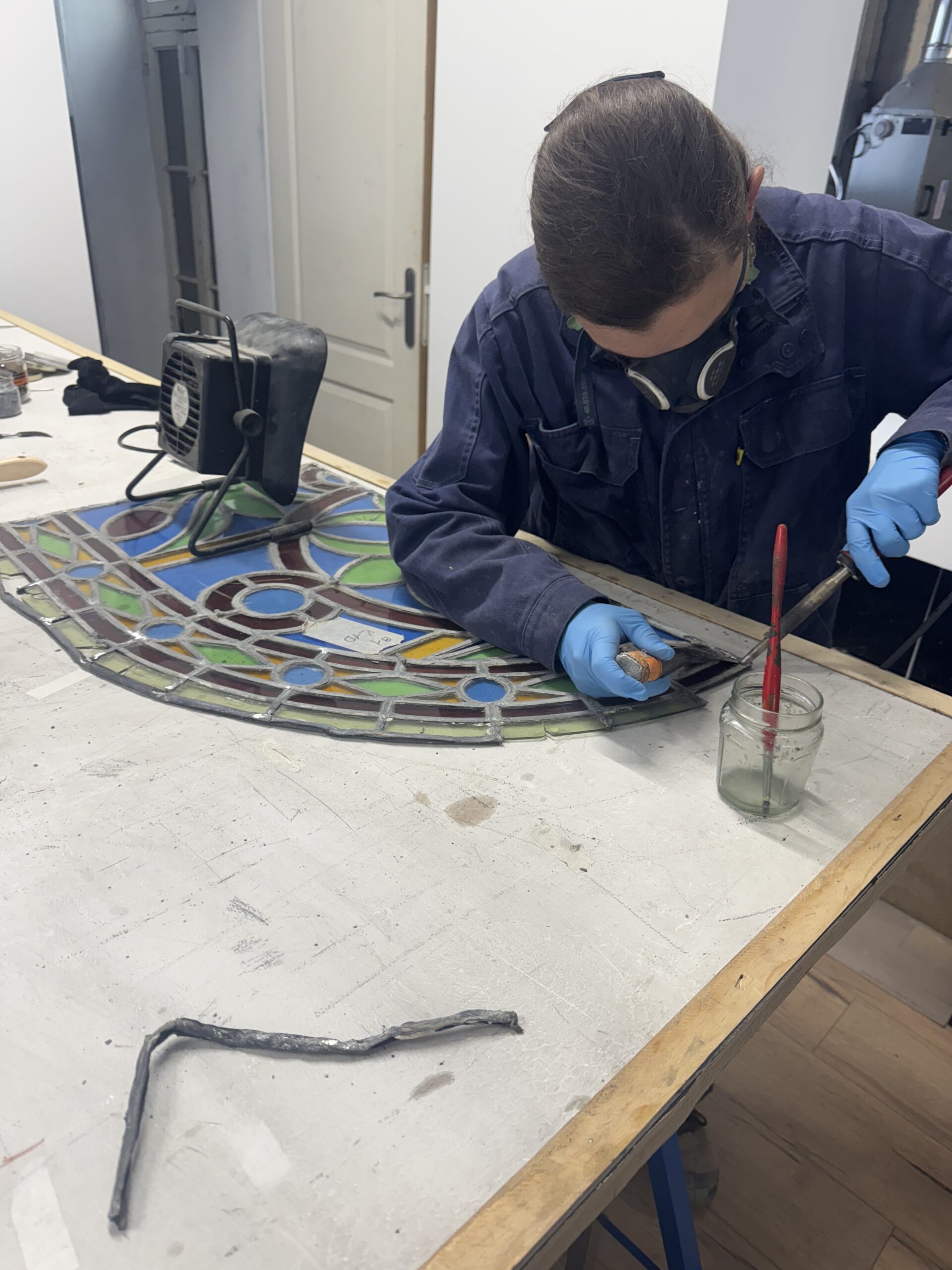
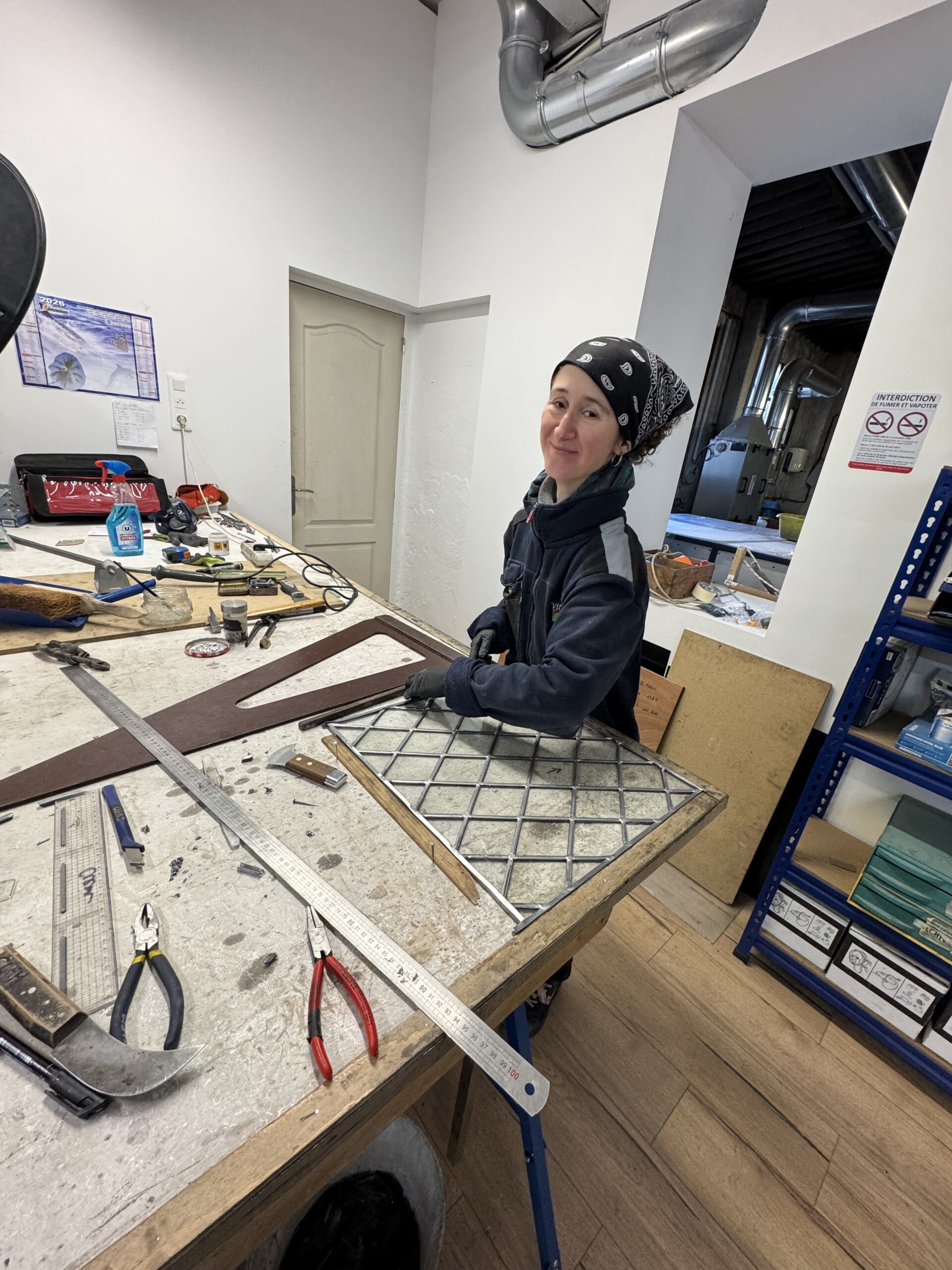
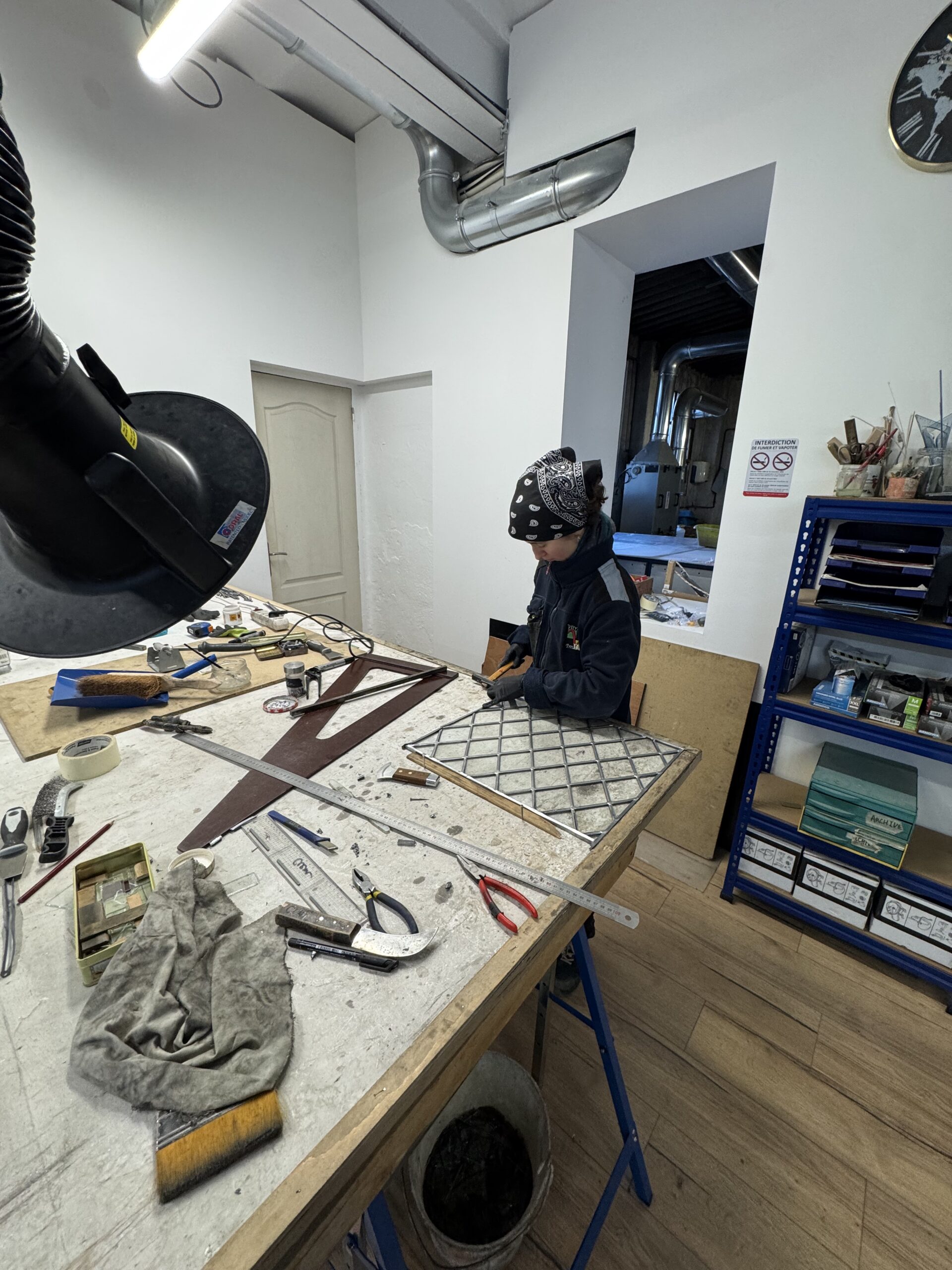
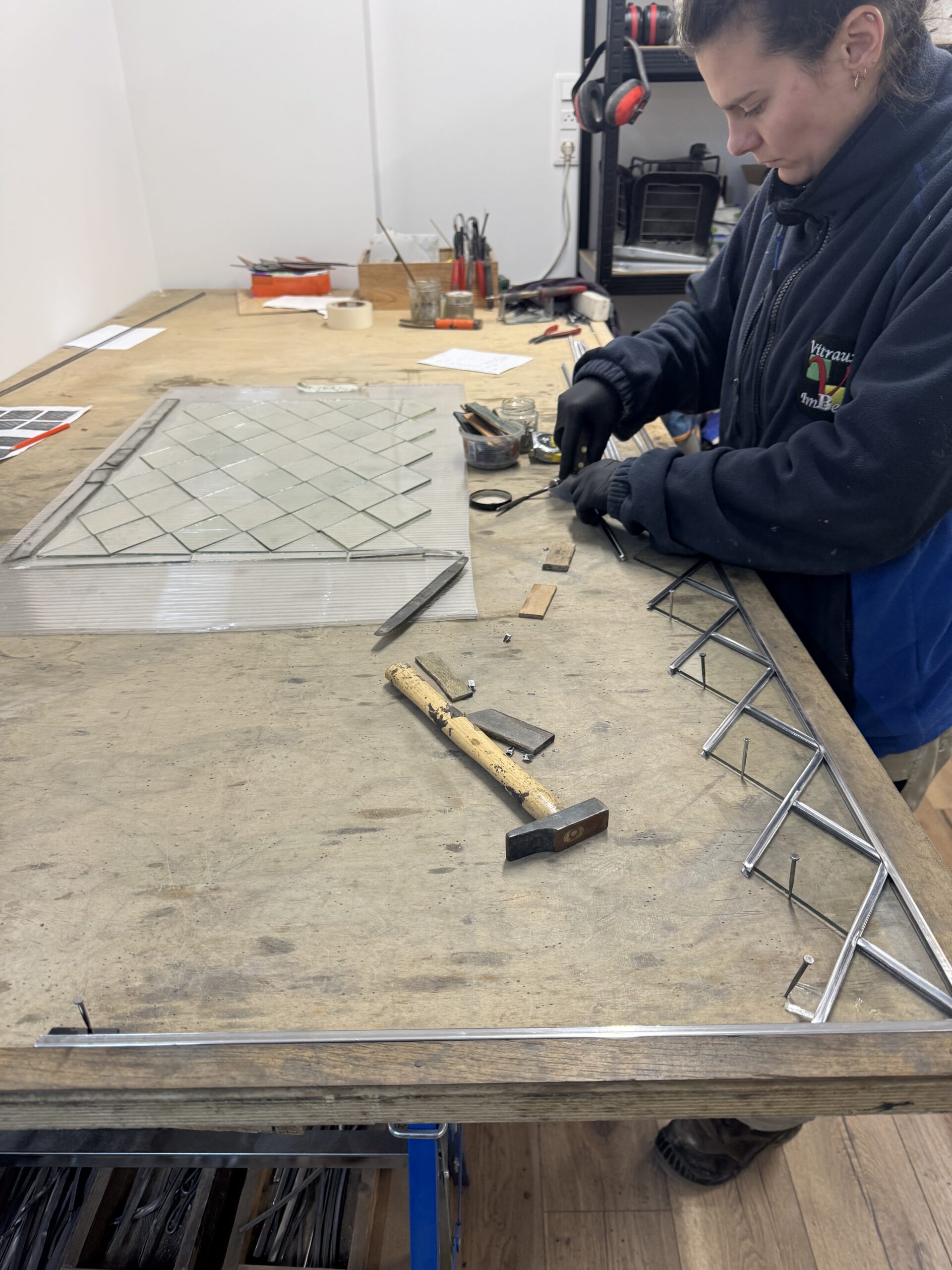
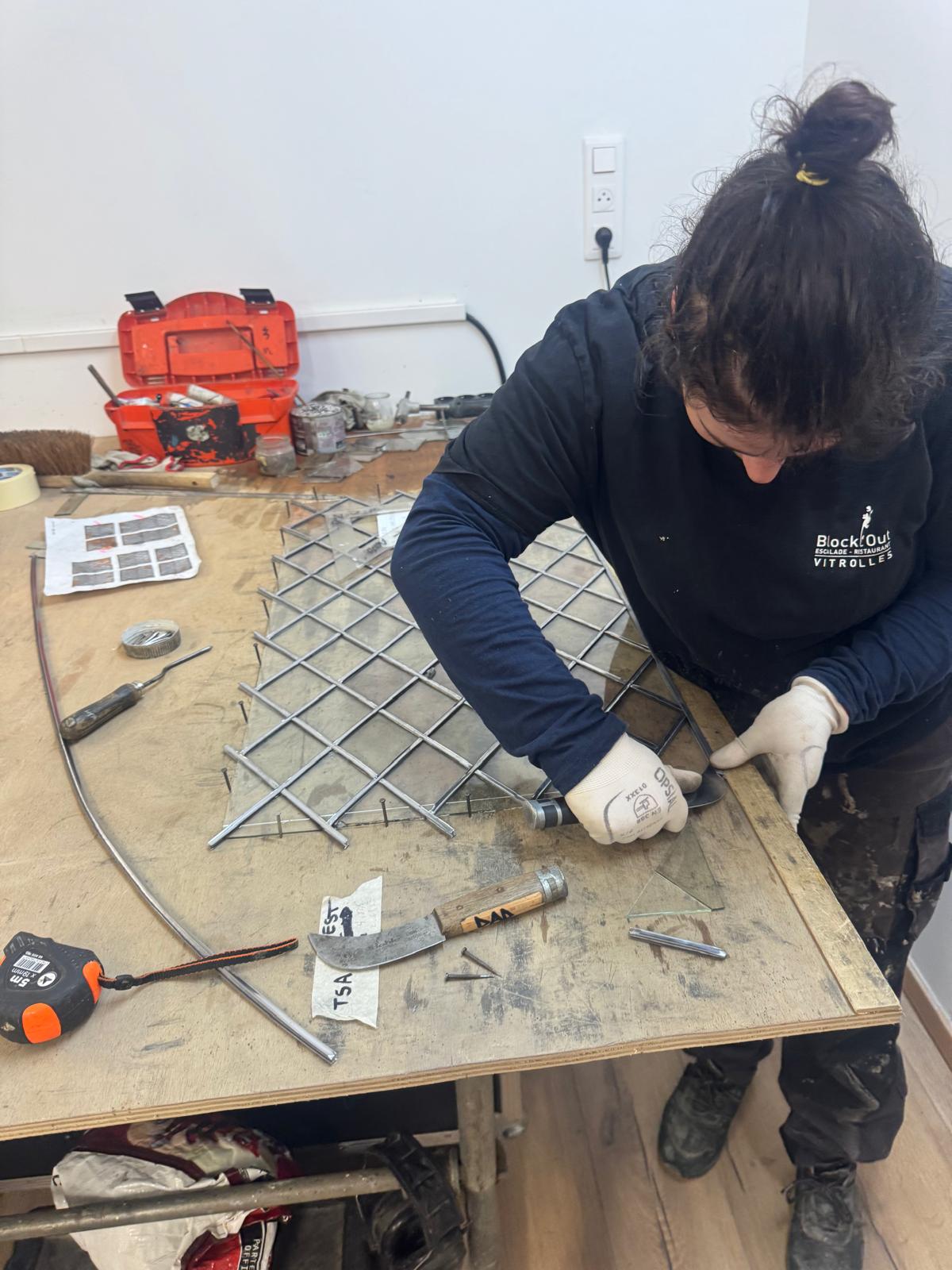
The pieces are assembled on the cartoon with H-section lead came, stretched and trimmed with a knife. Every joint is soldered with tin on both sides. The panel takes shape, and the lead lines become the drawing of the work.

06

Cementing, armatures and installation

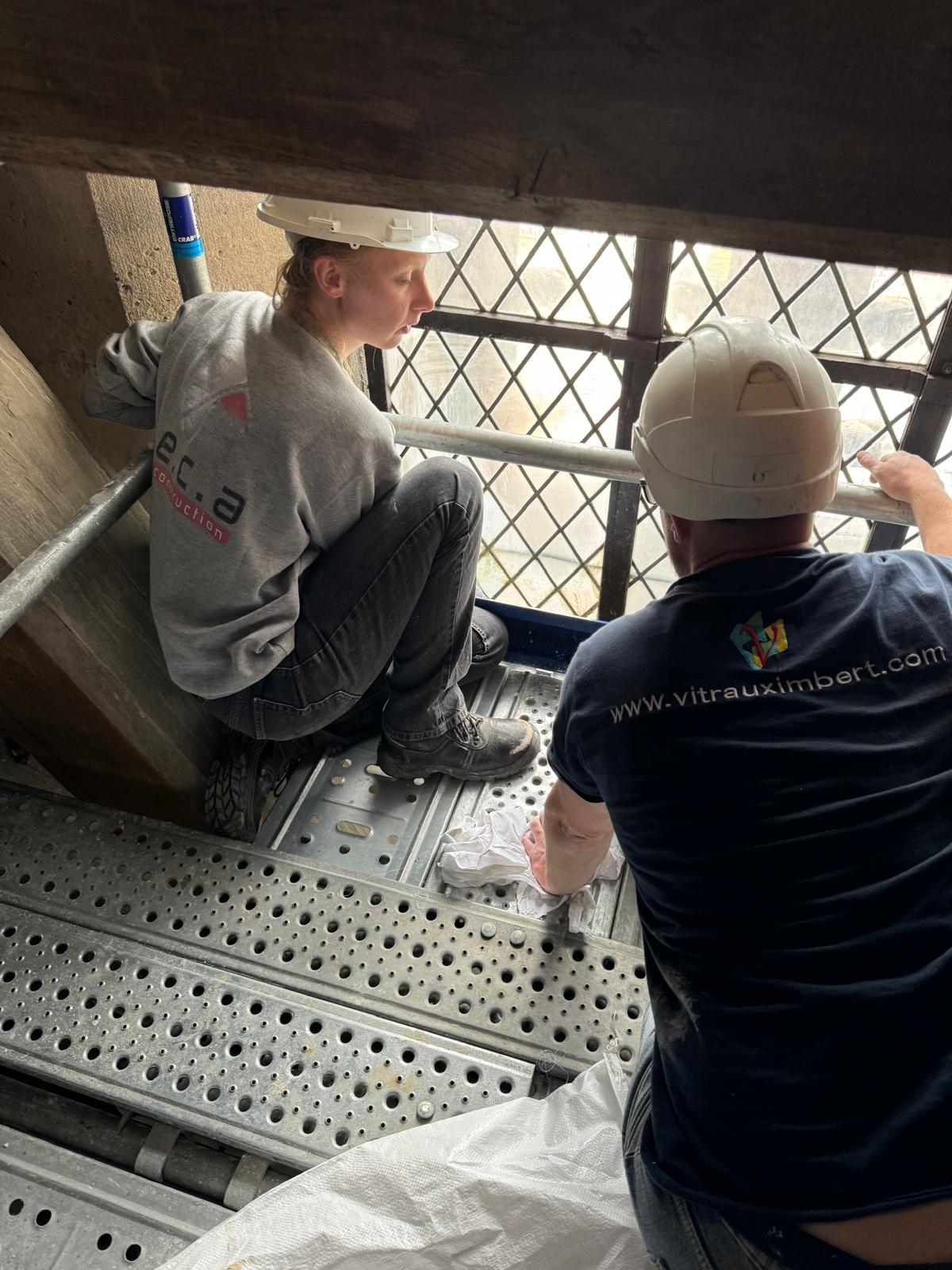
Cement is pressed under the lead flanges to make the panel rigid and watertight. We make the armatures, saddle bars and fittings in the workshop, then install the stained glass on site, whether in a cathedral window or a front door.

Restoration

To restore, first understand

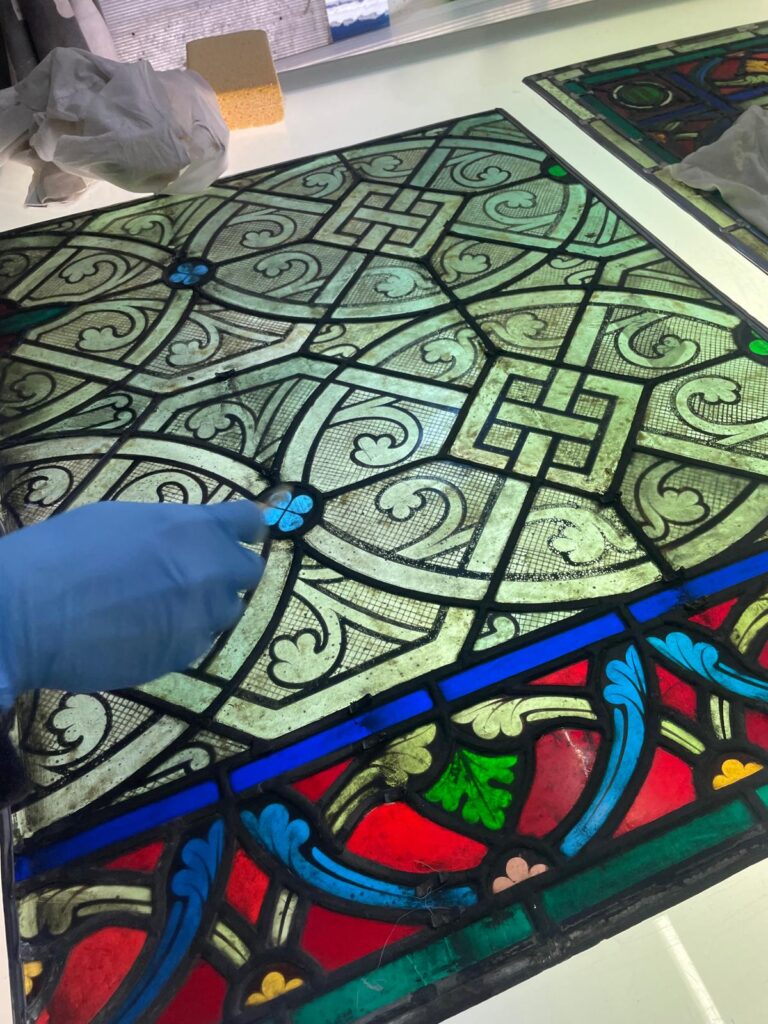
A historic stained glass window tells the story of its building, its glassmakers and its successive restorations. Before doing anything, we study it: recording damage, identifying the glass and paint, looking for the original lead. The assessment then guides a minimal, reversible and documented intervention.

The materials

What our hands work with

The choice of materials makes the difference between a window and a work that will last for centuries.

Antique glass

Mouth-blown as cylinder or crown glass, it carries the bubbles, streaks and variations of colour that make light come alive. We keep a large stock of shades for both new work and restoration.

Lead

Drawn into H-section came of various profiles, it traces the lines of the work and gives it flexibility. Trimming it with a knife and soldering it with tin take years of practice.

Grisaille and enamels

Ground and bound metal oxides, applied with a brush then kiln-fired: grisaille draws, silver stain gilds, enamels colour. Paint that does not fade.

Metal

Saddle bars, glazing bars, flat bars, hinges: forged or welded in our workshop, the armatures hold and protect the stained glass, discreet and faithful to the original ironwork.

Metalwork and ironwork

The armature, the invisible skeleton of stained glass

Stained glass cannot stand on its own: saddle bars, glazing bars and frames take the load of the wind and the weight of the glass. We design, make and restore these fixed and opening armatures in our workshop, in steel or brass, so that they disappear behind the work while supporting it for decades.
For large projects, we work with our partner metalworkers and glaziers, under our coordination, from survey to installation.
Technical innovations

Tradition, enhanced

With modern, purpose-built equipment, the workshop integrates stained glass into today’s structures without compromising on craft.

Fitting in double glazing

The stained glass is sealed inside standard or made-to-measure double glazing: insulation, security, easier cleaning and long-term preservation.

Glass bonding

A technique developed by the workshop: layers of coloured glass bonded without lead, for depth of light and shifting reflections.

Backlighting

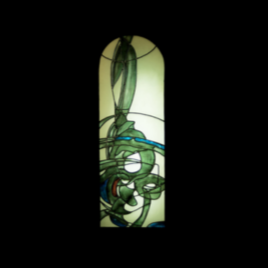
Diffused light built in behind the glass, in a frame, box or double glazing, bringing stained glass in a dim space back to life.

In the workshop

The craft, day to day

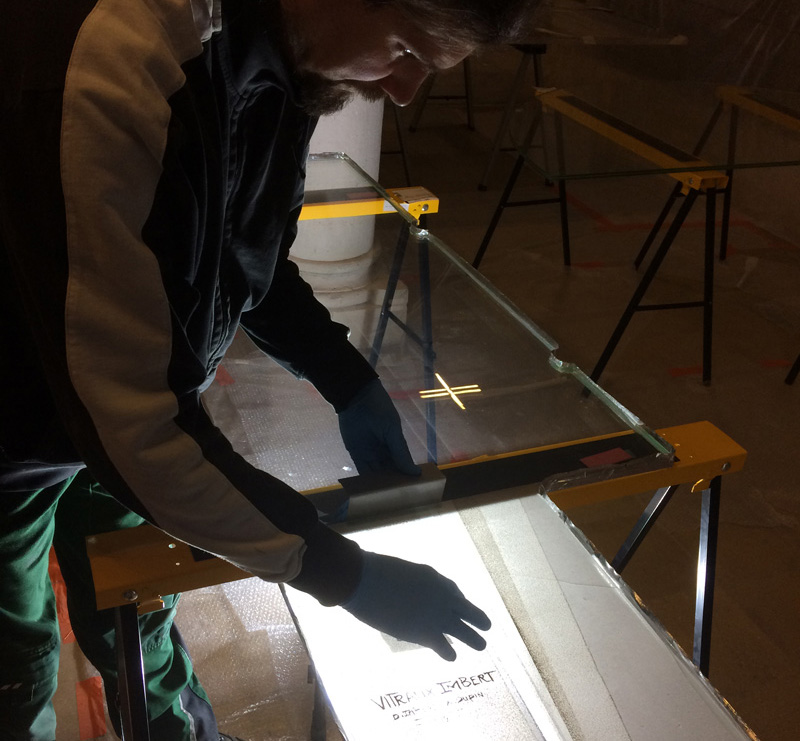
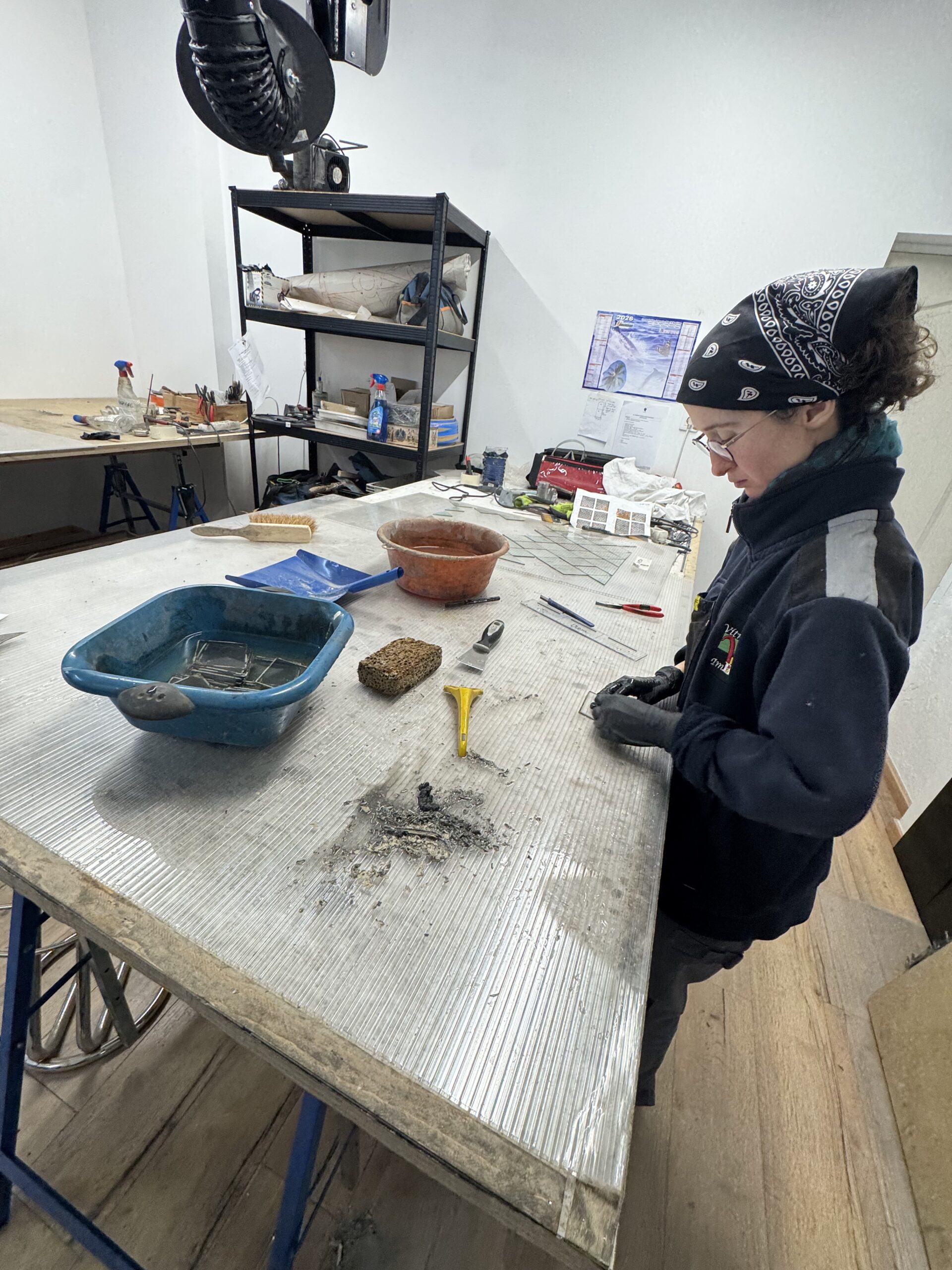
A few moments captured at the workshop tables, in the Chutes-Lavie district of Marseille.

Your project

Entrust your stained glass to expert hands

Bespoke creation or restoration of historic stained glass: the workshop studies your project and supports you from design to installation, anywhere in France.
Scroll to Top